INDUSTRIHISTORISKT MUSEUM
Välkomna in till platsen som var med och byggde Sverige!
EXPERIENCE - for real
The ironworks in Avesta is an industrial heritage site of national interest. It is an unusually complete iron production facility, even from an international perspective. Today, the museum Verket is located here, where film, sound, and technology playfully bring the past to life, allowing visitors to trace the journey of iron ore to iron and steel.
Historical background
The explosive industrial development worldwide placed new demands that the small, craft-driven works in Sweden could not meet. To operate a works, regulated water power, large-scale operations, and efficient transportation systems were required.
In 1872, Hjalmar Petre and Hampus August Cornelius purchased Stora Kopparbergs Avesta Works with the associated waterfalls and properties. In 1873, they formed Avesta-Garpenberg AB, with Cornelius as CEO and plant manager. At the site, there were buildings from the closed copperworks as well as a smaller bar iron forge. The company was not interested in the old buildings and immediately began planning and constructing the new large ironworks.
It was a period of economic prosperity when the new ironworks was established, and the calculations were based on continued high revenues. In 1878, Sweden underwent a financial crisis, which was a direct result of large investments made in areas that could not provide profitability within a reasonable time. In 1879, Avesta-Garpenberg AB went bankrupt. After the bankruptcy, Cornelius was appointed to continue overseeing the operations under the new owners, Jernkontoret and Norrköpings Enskilda Bank. In 1883, Avesta Jernverk AB was founded with Jernkontoret as the majority shareholder. One of the minority shareholders at that time was Axel Johnson. In 1905, Axel Johnson acquired the majority of shares, and from 1910, the ironworks became entirely Johnson-owned.
Historical walk
An unusual historical walk
Remember
The experience is partly an adventure. Be careful where you put your feet and watch your head in narrow passages. Children should never be left unattended!
Martin furnace
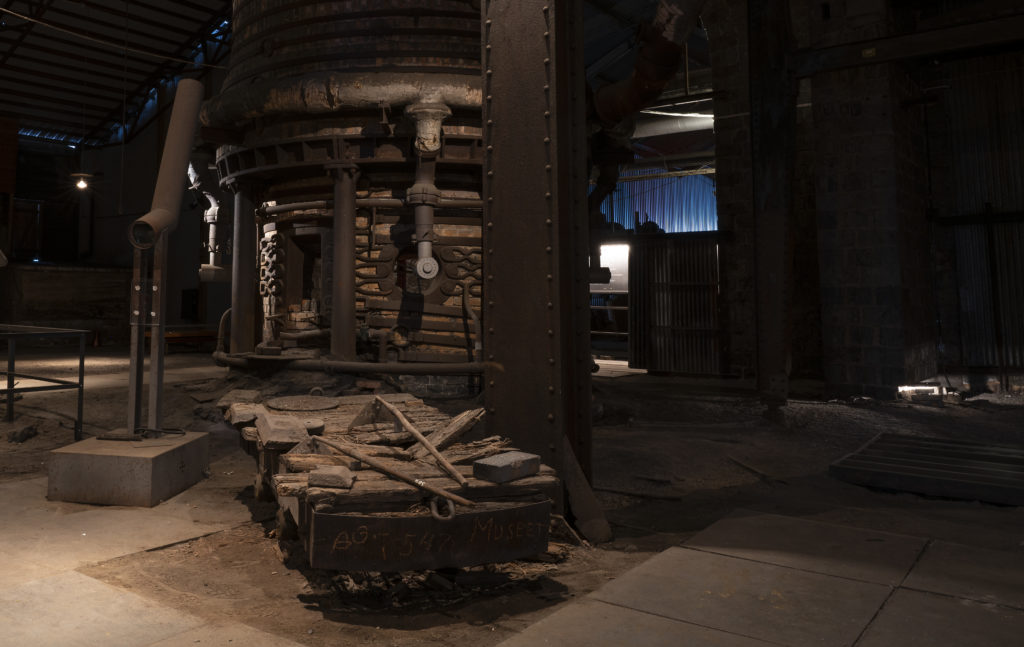
In Avesta, there were six martin furnaces. The ones that remain are furnace number 2 and number 3. In the martin furnaces, pig iron and scrap iron were melted under oxygen supply. During the process, additional substances were added that affected the properties of the iron. The product obtained was called steel ingot. Blast furnace number 2, the northernmost, was built in 1886-87. It was the first blast furnace in Avesta.